
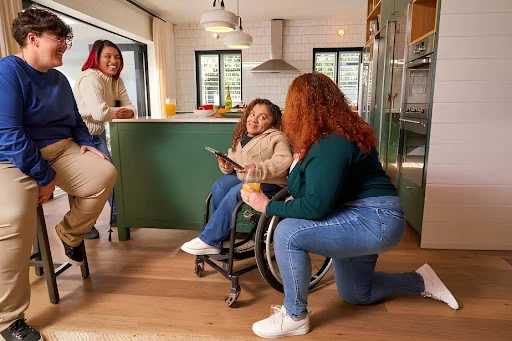
For many adults with disability, opportunities to build genuine friendships do not always come easily. Transport barriers, limited social opportunities, and a reliance on family or paid support can make everyday connection harder to find than it should be. Shared living for adults with disabilities offers something different: the chance to build real relationships simply through the rhythm of everyday life, rather than through a scheduled outing or program.
This article looks at why shared living can be such a natural setting for friendship, and what makes some homes work better for connection than others. It is written for participants, families, and support coordinators thinking through what genuinely good shared living looks like, beyond just a roof and a support roster.
How Shared Living for Adults With Disabilities Builds Connection
Living alongside other people naturally creates small, everyday moments to connect: a chat over breakfast, watching the same show in the evening, or helping each other out with a task. These little moments add up over time in a way that a weekly outing simply cannot replicate. This kind of social connection in a shared home does not need to be planned or scheduled; it happens simply because people are already under the same roof.
For someone who has spent a lot of time living alone or heavily reliant on family, sharing a home with people their own age, often with similar interests or experiences, can open up a kind of everyday companionship that feels natural rather than arranged. Over time, these everyday interactions can grow into something much more meaningful than a passing conversation.
Making Friends With a Disability: Why It Can Be Harder
Making friends with a disability often comes with extra barriers that are easy to overlook. Getting to social events can depend on transport or support availability, communication differences are not always understood by people outside disability services, and many adults with disability have fewer casual, unplanned social opportunities than their peers.
Shared living removes some of these barriers by placing potential friendships right where someone already lives. There is no need to organise transport or plan an outing in advance just to spend time with someone; the opportunity is simply there, every day. Over time, this can make a real difference to someone’s confidence in social situations more broadly, not just at home.
Companionship in Supported Living: More Than Just a Housemate
Companionship in supported living is about more than sharing a roof. When housemates are thoughtfully matched, based on personality, interests, and daily routines, rather than just availability, genuine friendships often follow.
This is where good support makes a real difference. Support workers who understand each person’s communication style and interests can gently encourage shared activities, whether that is cooking together, watching a favourite sport, or simply sitting down for a proper conversation, rather than leaving connection entirely to chance. Small, consistent encouragement from a familiar support worker often matters more than any single planned activity.
Reducing Loneliness With a Disability Through Everyday Moments
Reducing loneliness with a disability rarely comes down to one big solution. It tends to come from lots of small, ordinary moments stacking up over time, a shared laugh in the kitchen, a familiar face at breakfast, or someone noticing when you are having a harder day.
Shared living creates a built-in structure for these moments to happen naturally. Rather than loneliness being something to actively fight against, a well-run shared home simply reduces the chances of it building up in the first place. Even on days when someone does not feel like talking much, simply knowing another person is nearby can make a real difference to how isolated they feel.
What Makes a SIL Home Good for Friendship?
Not every shared home naturally leads to strong friendships, and a few things tend to make the biggest difference. Thoughtful housemate matching matters enormously, since people with wildly different routines or communication styles can find shared spaces stressful rather than comforting. A rushed match, made purely on the basis of an available bed, rarely sets people up well for building a genuine connection.
Comfortable common areas that actually invite people to spend time together, rather than just a shared kitchen people pass through, also help. So does supported independent living that is properly staffed, so support workers have the time and awareness to notice when someone is withdrawing and gently encourage connection rather than leaving it entirely up to residents.
Finding the Right SIL Home
If friendship and connection matter to you or your family member, it is worth raising this directly with any provider you are considering, rather than assuming it will simply happen. Ask how housemates are matched, whether meet-and-greets happen before move-in, and how support workers encourage social connection day-to-day.
For families exploring options, resources on SIL housing in Melbourne can be a useful starting point for understanding what to look for in a home and a provider. When shared living for adults with disabilities is set up thoughtfully from the start, friendship tends to follow far more naturally, rather than being left to chance once someone has already moved in.
How The Jovials Can Help
At The Jovials, we know that a shared home works best when the people living there actually get along, not just when the paperwork lines up. Our team supports participants with community participation and everyday activities that help build confidence and connection, both inside the home and out in the wider community. We also work closely with families and support coordinators to understand what genuinely matters to each participant before a housemate match is even considered.
If you are exploring shared living for adults with disabilities and want support that genuinely considers compatibility and connection, get in touch with our team today.
No comment yet, add your voice below!