
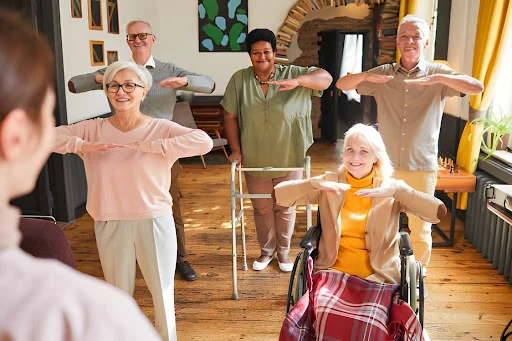
A small stumble in the kitchen or a moment of unsteadiness on the stairs can feel like nothing at first, but for many older adults, these small warning signs are worth paying attention to. Balance exercises for seniors are one of the simplest and most effective ways to reduce the risk of a fall and stay confident moving around the home and community.
This guide looks at why balance changes as we age, some gentle exercises to try, and how allied health professionals like physiotherapists can help build a program that actually fits the person doing it. None of this replaces individual medical advice, but it is a good starting point for understanding what is available.
Why Balance and Mobility Change as We Age
Balance relies on three systems working together: the inner ear, eyesight, and proprioception, which is the body’s sense of where it is in space. As we get older, all three can naturally decline, and muscle strength tends to reduce as well, particularly around the hips, ankles, and core.
None of this means a fall is inevitable. It simply means the body needs a bit more deliberate training to keep these systems sharp, in the same way muscles need regular use to stay strong. Some medications and vision changes can also play a role, which is part of why a proper assessment is useful rather than guessing at the cause.
Simple Balance Exercises for Seniors to Try
Balance exercises for seniors do not need special equipment, though it is worth having a sturdy chair or wall nearby for support, and checking with a GP or allied health professional first if there is an existing health condition or fall history.
- Weight shifting: Standing behind a chair, shift your weight slowly from one foot to the other.
- Sit-to-stand: Standing up from a chair without using your hands; repeat a few times to build leg strength that supports balance.
- Tandem stance: Standing with one foot directly in front of the other, heel to toe, holding the chair if needed.
- Marching on the spot: Lifting each knee gently while holding onto support, which helps with coordination and confidence.
Starting slowly and only progressing when a movement feels comfortable is far more important than moving quickly through a routine. Most people find it easier to stick with a few short sessions each week rather than one long, tiring one.
Mobility Exercises for the Elderly: Staying Steady on Your Feet
Balance and mobility are closely linked, and mobility exercises for the elderly usually focus on the everyday movements that matter most: walking, bending, reaching, and getting in and out of a chair or car.
Gentle stretching, short regular walks, and simple range-of-motion exercises for the ankles, hips, and shoulders all help keep joints moving freely. Staying consistent matters more than intensity, since small amounts of regular movement tend to be far more sustainable than occasional, harder sessions.
For someone recovering from surgery, illness, or a previous fall, mobility exercises for the elderly may need to be adapted quite carefully at first, which is exactly the kind of situation where a physiotherapist or exercise physiologist can make the process safer and less daunting.
Falls Prevention Exercises: Why They Matter
Falls are a genuinely serious issue for older Australians, with around one in three to one in four adults over 65 experiencing a fall each year, and falls remaining one of the leading causes of injury-related hospitalisation in this age group.
The strongest evidence for falls prevention exercises points to programs that combine functional balance training with muscle strength work, done regularly and made progressively more challenging over time. Structured programs such as Tai Chi and the Otago Exercise Program are well studied and have been shown to reduce fall rates in community-dwelling older adults.
This is exactly the kind of program an allied health professional is trained to design and adjust safely, rather than something to piece together from memory alone.
How Physiotherapy for Older Adults Makes a Difference
Physiotherapy for older adults typically starts with an assessment of strength, balance, gait, and any specific risk factors, rather than a generic exercise sheet. From there, a physiotherapist can build a program tailored to what someone can safely manage now, and adjust it as strength and confidence improve.
Families in Melbourne looking for dedicated allied health for seniors in Melbourne can access physiotherapy, occupational therapy, and other allied health support coordinated as part of an ongoing care plan, which often works well alongside day-to-day support at home.
How to Stay Mobile as You Age: Beyond Exercise Alone
Thinking about how to stay mobile as you age goes beyond exercise alone. Good footwear, clear pathways at home, adequate lighting, and regular check-ins with a GP all play a role in reducing fall risk alongside a structured exercise routine. Simple changes, like removing loose rugs or adding a rail near steps, often make a bigger difference than people expect.
Staying socially and physically engaged also matters. Regular community participation and support with everyday tasks can help someone stay active and connected, rather than becoming isolated at home out of fear of falling. Isolation itself can quietly contribute to reduced activity, which then makes balance and mobility harder to maintain over time.
How The Jovials Can Help
At The Jovials, our team supports participants with everyday tasks that complement an allied health exercise plan, whether that is assistance with personal activities at home or coordinating with a broader care team to keep everyone working towards the same goals. We know that balance and mobility support works best when it is woven into daily life rather than treated as a separate, occasional appointment.
If you would like to talk through support options for yourself or a loved one, get in touch with our team today.
No comment yet, add your voice below!